Why repetition builds long-term power.
There comes a point in any long commitment where it stops feeling inspiring.
The workouts aren’t new anymore.
The same prayers come out of your mouth.
You repeat the same drills you’ve already mastered.
You step on the scale and the number hasn’t moved in weeks.
You’re doing the work — and no one is applauding it.
Suddenly, boredom starts whispering that something must be wrong.
Humans are wired for stimulation. Novelty spikes dopamine. A new program, a new relationship, a new idea, a new direction — those changes make you feel alive. Your brain lights up. You feel momentum.
But repetition is different.
Repetition doesn’t give you a high.
It gives you stability.
Think about the religious practices that have endured for centuries.
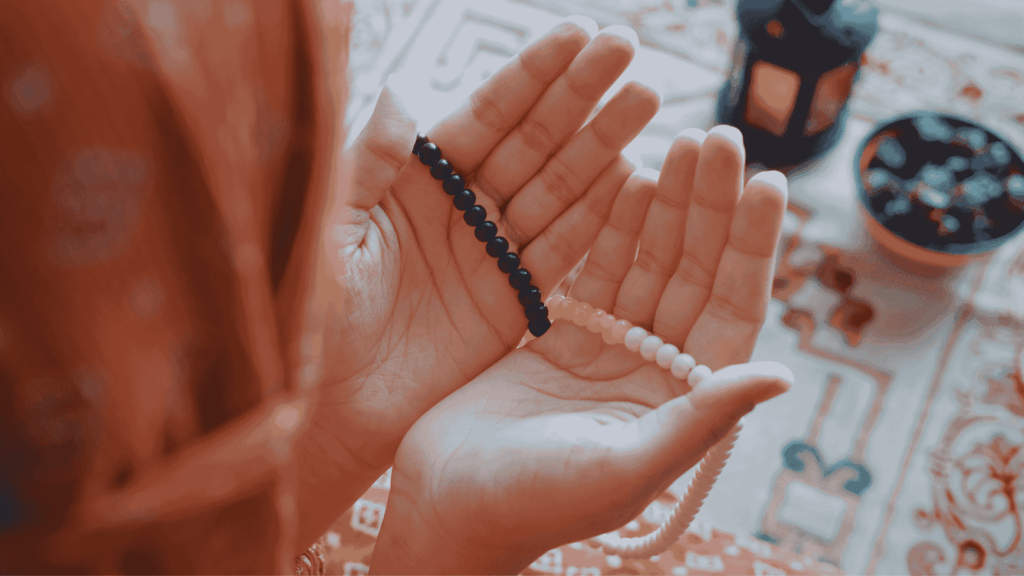
Catholics move rosary beads through their fingers, repeating prayers that have been spoken for generations.
In Judaism, the Shema is recited morning and night.
In Buddhism, mantras are repeated thousands of times.
None of these practices are built around emotional spikes.
They are built on repetition.
In fact, repetition is the point.
Repetition humbles your ego, and lowers the emotional noise.
It reminds you that growth isn’t glamorous.
It trains you to stay present instead of seeking a rush.
The same is true in sports.
I’m a professional bodybuilder.
In bodybuilding, there is nothing glamorous about eating the same meals for months, measuring macros down to the gram, repeating the same lifts week after week.
There are entire prep seasons where your days look nearly identical. But what it takes is what it takes!
You don’t grow your muscles and reshape your physique by constantly changing things. You grow because the muscle fibers respond to consistent stress and consistent recovery over time.
The same is true for most elite athletes.
A basketball player shoots the same shot thousands of times.
A swimmer drills the same stroke.
A pianist runs scales.
Repetition isn’t thrilling.
But it’s necessary.
Repetition strengthens neural pathways.
The Psychology Behind Boredom
Psychologically, boredom often shows up when dopamine drops.
When something is no longer new, your brain doesn’t reward it with the same chemical rush. And in a culture built on constant novelty — new feeds, new updates, new opportunities — we have grown uncomfortable with anything that doesn’t stimulate us.
So we assume that if it feels flat, it must be “misaligned”.
That is a dangerous assumption.
Discomfort is not the same as misalignment.
Monotony is not the same as stagnation.
Often, monotony is where depth is built.
Look at the broader culture for a moment. We live in an era of endless options.
Partners are replaced.
Jobs are changed quickly.
News cycles reset every hour.
Algorithms feed us constant variation.
Reinvention is praised.
Restlessness is normalized.
And yet anxiety is high. Addiction is high. Depression is high. Violence and disconnection are rising.
If constant novelty created stability, we would be the most peaceful generation in history.
Clearly, we are not the most peaceful generation in history.
Too much stimulation fragments attention. Too much variety prevents roots from going deep.
When everything changes quickly, nothing matures.
The Questions That Matter
When the course feels boring, the question is not, “Is this boring?”
The questions are, “Is this meaningful?” and “Is this still worth building?”
When you choose a direction thoughtfully — in your faith, your health, your work, your sobriety, your healing — then the middle stretch will test you.
The emotional high will fade, and so will the applause.
If this season feels slower, quieter, steady, but less emotionally charged than the beginning — that probably means you are building something that lasts.
And that matters more than any quick high.
Keep going.
I’m right there with you on the journey.
And if you’d like to explore working with me during this transition in your life, you can apply for a complimentary consultation here.
I will only have these spots open for a limited time, and I am quite discerning with who I work with, and I encourage you to be discerning too. You can fill out this brief application to get started, and be considered.