Why Greater Awareness Brought Grief Before It Brought Peace
There is a kind of grief nobody warns you about.
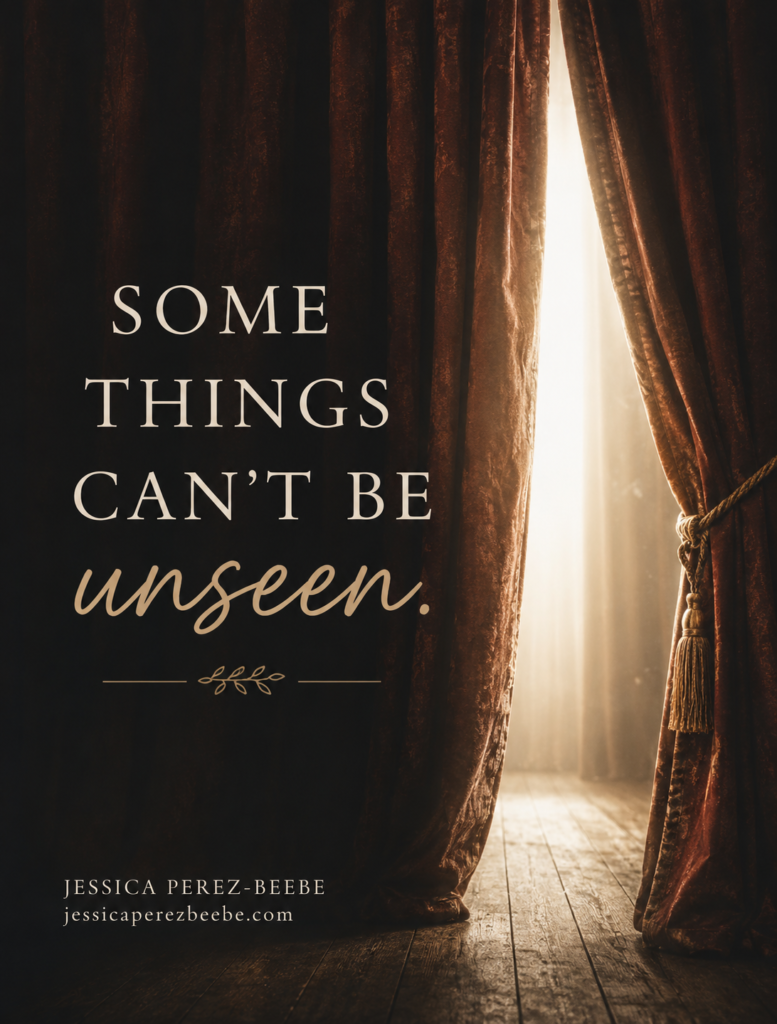
It’s the grief that comes when the curtain gets pulled back and you realize the world is much different than what you thought it was.
Not because you were necessarily naive or uninformed.
But because there are some things you simply don’t see until you begin looking for them.
Over the last few years, this has become shockingly apparent.
By all standards, I am an educated, successful, relatively well-read, informed, and reasonably discerning person. But there were (and still are) entire categories of information I had never explored, or even been made aware of.
After all, they weren’t topics I studied in school or university, nor were they conversations taking place in my social circles.
Perhaps that’s because they were intentionally omitted. Or perhaps many of the people teaching them had simply accepted the same narratives they had been taught, never feeling an impetus to question them.
Whatever the reason, there were entire categories of history, power, theology, media, and human nature that remained unexplored for me until I intentionally began following those threads.
That is true for many of us.
Not because we are naive or unintelligent.
But for most of us, high achievers in particular, it’s because we’ve been busy “succeeding within the system”.
We’re climbing the corporate ladder, building businesses, raising families, paying mortgages, pursuing goals, and trying to create meaningful lives.
Most of us aren’t spending our evenings questioning the systems or foundations beneath everything we’ve been taught, told, or encouraged to believe.
I now suspect that much of that busyness isn’t accidental. It’s built into the very systems in which we live.
If we are busy, we are distracted.
If we are divided – left vs right, black vs white, straight vs gay, we are distracted.
Look around you. Distraction and division have become the currency of our culture. And distracted and divided people are far easier to manipulate than those who are united.
The Process of Awareness
For me, the process of awareness started gradually.
Covid was certainly one catalyst. Not simply because of the virus itself, but because of everything surrounding it—the conflicting information, the censorship, the impact on families, churches, schools, businesses, children, and personal freedoms.
The clear division.
The vaccinated vs. unvaccinated.
The masked vs. unmasked.
Those who trusted government officials and mainstream media vs. those who turned to independent media.
I watched with amazement as friendships and families became strained over differing opinions.
But Covid was really just the beginning.
What started as curiosity about one issue slowly became a willingness to question assumptions I had rarely thought to question before.
I found myself reading books I never would have picked up a few years earlier. Listening to voices I would have previously dismissed. Exploring subjects that had never been discussed in my schools, my university classrooms, my professional circles, or even among my closest friends.
Some of those rabbit holes led me into current events. Others took me decades—and sometimes centuries—into history. Some challenged my assumptions about government, media, education, psychology, Hollywood, and institutions we were taught to trust. Others led me into theology, philosophy, and the deeper questions about the nature of man.
What surprised me most wasn’t any one subject. It was that the same patterns kept showing up in completely different places, among completely different people, and at completely different times in history.
Deception disguised as truth, corruption hidden behind respectability, evil cloaked in beauty or virtue, and the unsettling realization that things are not always what they appear to be.
That’s what kept me reading.
The deeper I looked, the less interested I became in individual events and the more interested I became in understanding the patterns beneath them.
The Twitter Files. The Epstein documents. Human trafficking and child exploitation. The UK grooming gangs investigations. The hidden histories behind institutions most of us never thought to question. Wars that left me grieving for innocent civilians—and especially children. And more recently, even events like the assassination of Charlie Kirk.
With every thread I pulled, another one unraveled.
And eventually, those threads led me to much bigger questions about power, corruption, human nature, discernment, and ultimately the reality of evil itself.
I started encountering things that were so disturbing, so dark, and so difficult to reconcile with the world I thought I understood that they genuinely affected me—not just intellectually, but emotionally and spiritually.
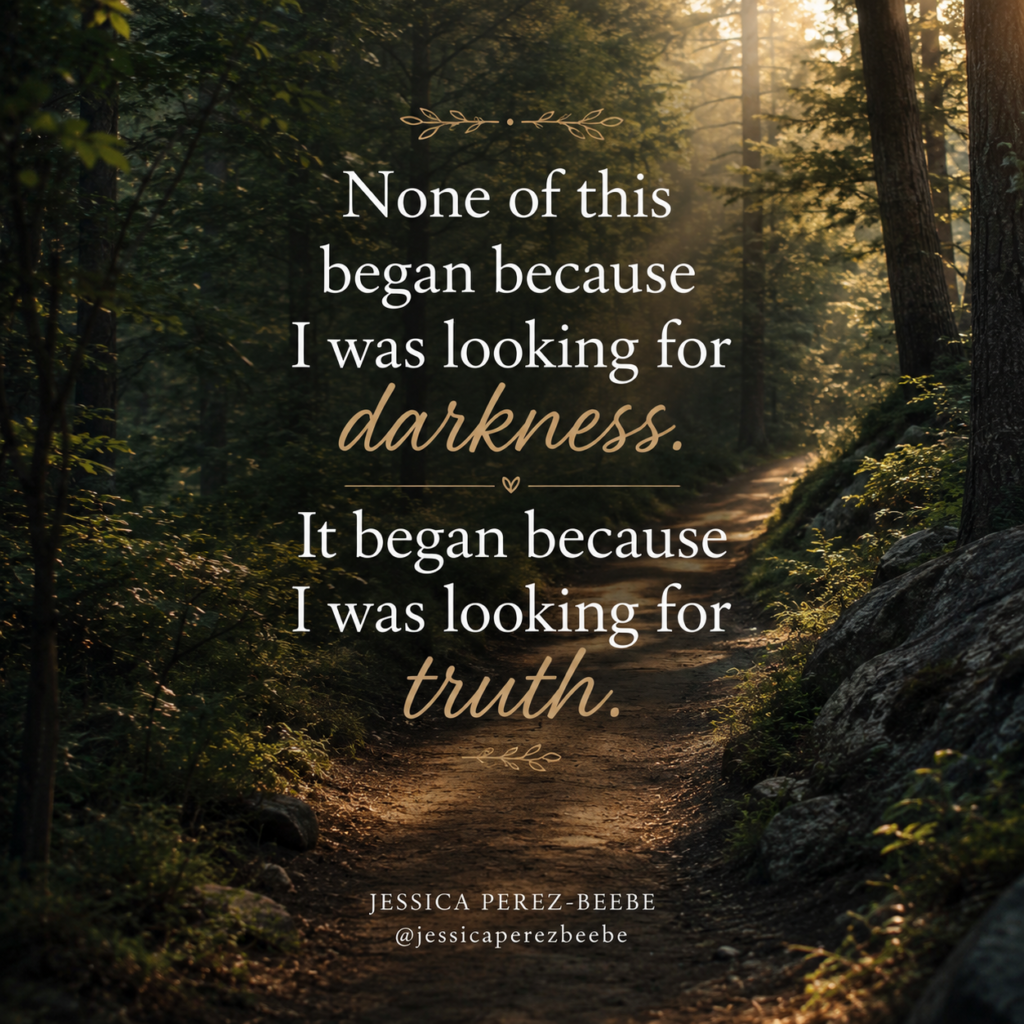
None of this began because I was looking for darkness.
It began because I was looking for truth.
Some Things Can't Be Unseen
For most of my life, I was an eternal optimist.
Just a few weeks ago, while celebrating our 50th birthdays together, my best friend from high school reminded me of that.
I was sharing with her how much my perspective has changed over the last few years, and she looked at me and said,
“Jess, your optimism was one of the things I’ve always loved most about you.” Yeah, me too, I thought to myself.
In that moment, I silently mourned—not only for my friend and for myself, but for the realization that I could never quite see the world the way I once had.
That conversation stayed with me all week as I contemplated how to reconcile this “new side of myself.”
I don’t believe I’ve lost my tendency to see the good in people.
But experience has made me more discerning. Slower to trust. More willing to question the narratives I’m given, regardless of where or who they come from.
It’s not that I got “red-pilled” and am suddenly all-knowing.
Quite the opposite, in fact. Because the deeper you go, the more you realize how much you don’t know.
What I do know is that once you’ve pulled back the curtain, it’s difficult to pretend the curtain is all there is.
Some things can’t be unseen.
And that’s where part of the grief comes in.
Because awareness doesn’t automatically bring peace.
For me at first, it brought anger.
Then sadness.
Then more questions than answers.
I still wrestle with those emotions, and that’s okay.
It’s a sign that I’m a human being, with a God-given conscience.
If our hearts don’t ache when confronted with suffering, exploitation, corruption, violence, and evil, then something is very wrong.
Looking Away is Not the Answer
As painful as awareness can be, keeping our heads in the sand doesn’t protect the people we love.
It doesn’t strengthen our communities.
And it certainly doesn’t diminish evil.
If anything, history has proven that it does just the opposite; it strengthens it.
Which takes me back to the question I’ve been asking myself…
How do I reconcile all of this?
Seeking The Light
What ultimately surprised me most is that the deeper I dove into this darkness, the more I was drawn to the light.
For me, that light is God.
One of the unexpected comforts I’ve found in Scripture is that the Bible never pretends evil doesn’t exist.
From Genesis through The New Testament, it acknowledges deception, corruption, human brokenness, and the ongoing struggle between good and evil—along with our free will to choose whom we will serve.
“But as for me and my house, we will serve the Lord.” — Joshua 24:15
It’s all right there, in black and white.
Now, when I open the Bible, I’m not just looking for encouragement. I’m reading it through an entirely different lens.
The more I read, the more I realize God has already prepared us for the realities of this world. None of what I’ve been wrestling with is new to Him.
That doesn’t make suffering any easier to witness. It doesn’t erase the sadness or the questions. But it reminds me that none of this has caught God by surprise.
Somehow, knowing that has changed everything for me.
It hasn’t answered every question, but it has given me somewhere to place my hope—hope in God’s ultimate plan.
I’m also reminded that we are more than flesh and blood.
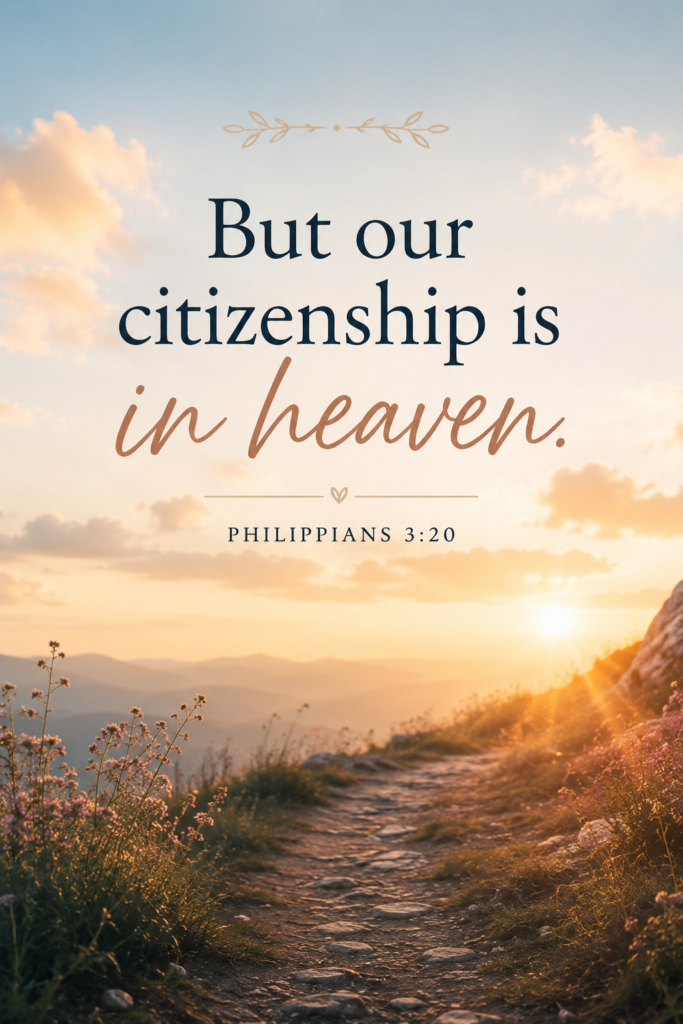
This earthly life is not our final home or our final chapter. As Paul writes in Philippians 3:20, “Our citizenship is in heaven.”
We were created for eternity, and somehow that makes even the darkest parts of this world easier to place in perspective.
What Remains
I still wrestle with many of these things.
I still have days when I feel discouraged.
I’m still learning.
I’m still reading.
I’m still praying.
And I’m still asking questions.
I still find myself staring at a headline or listening to a story and thinking, “How can this possibly be real?”
But now, instead of carrying all of it by myself, I bring it to God.
Through prayer.
Through Scripture.
Through silence.
Through surrender.
All of this has brought me to a deeper certainty about where hope is found.
Not in politics or politicians.
Not in institutions.
Not in influencers.
Not in my own ability to figure everything out.
But in God, who reminds me that this broken world is not the end of the story.
Are You Feeling Any of This?
One of the unexpected gifts of the internet has been that more ordinary people have begun asking difficult questions.
People are reading more broadly, comparing sources, listening to long-form conversations, studying history, and challenging assumptions they once accepted without much thought.
That is encouraging.
If you’ve found yourself on a similar journey, I’d genuinely love to hear from you.
- What thread first made you stop and look more deeply?
- Where has that journey taken you?
- What has helped you hold onto hope?
Some of the most meaningful conversations I’ve had over the last few years have begun with someone quietly saying:
“I’ve been feeling this too.”
Maybe that’s because more of us are walking this path than we realize.
Until next time,
Jessica